
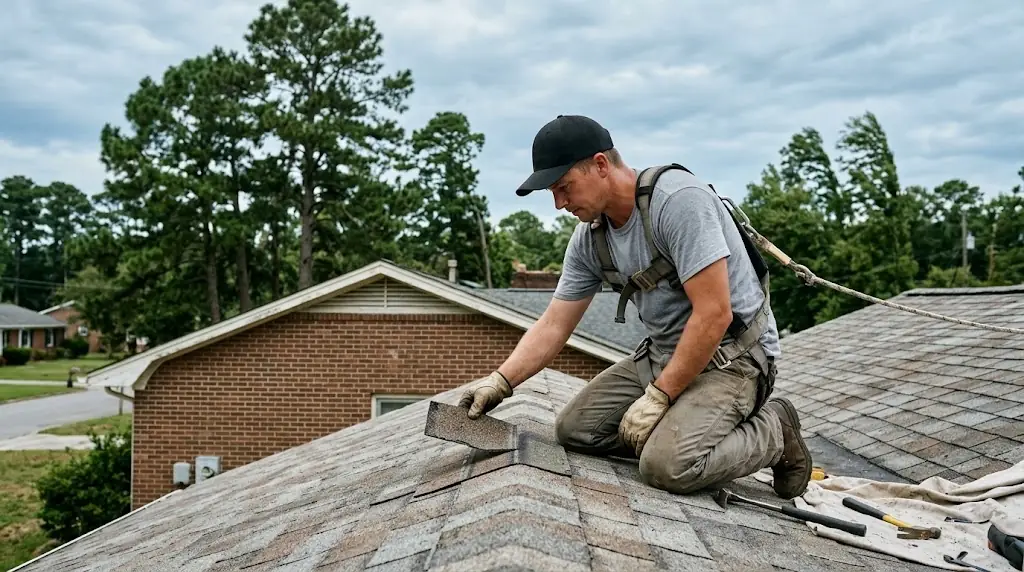
A water stain on the ceiling. A few shingles in the yard after a storm. A roof that just looks tired. Each one leads to the same question: fix it, or start over?
If you’re trying to decide whether to repair or replace your roof in NC, the answer usually comes down to three things: how old the roof is, how much of it is damaged, and what shape the rest of it is in. A repair makes sense when the damage sits in one area and the roof still has years left. A replacement makes more sense when wear shows up across the whole roof or leaks keep coming back.
In eastern North Carolina, heat, humidity and storms push roofs harder than in many other places. Here’s how to read the signs and make the right call.
Repair or Replace Your Roof in NC: How to Know Which One You Need
Three questions settle most cases.
- How old is the roof? An asphalt shingle roof usually lasts 15 to 30 years, depending on the shingle type and how well the attic breathes. A roof in the first half of its life is almost always worth repairing.
- How much of the roof is damaged? Many roofers use a simple rule of thumb: if damage covers less than about 30 percent of the roof, a repair is usually the right call. Past that point, you end up patching a roof that is wearing out everywhere.
- What does the rest of the roof look like? A sound roof with one bad spot needs a repair. A roof where the shingles are brittle, bare or curling on every side needs a replacement, even if only one spot leaks today.
Signs a Repair Is Enough
The damage is in one area
A few missing or cracked shingles after a windy night are a classic repair. We replace the damaged shingles, check the ones around them, and make sure the seal strips are still holding.
The leak comes from flashing or a pipe boot
Many leaks have nothing to do with the shingles. Flashing is the metal that keeps water out where the roof meets a chimney, a wall or a valley. A pipe boot is the rubber collar around a plumbing vent. Both wear out sooner than the shingles around them, and both can be replaced on their own.
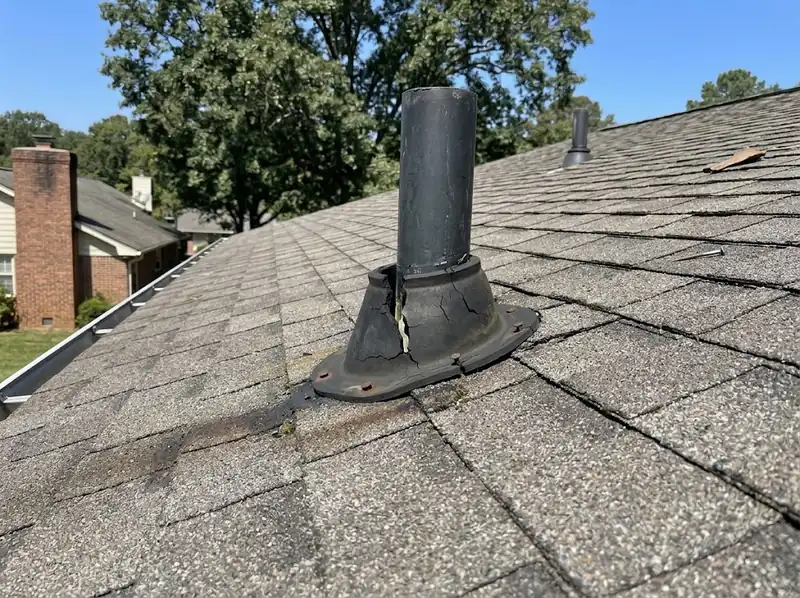
Storm damage on a roof with years left
Say a 6-year-old roof lost a row of shingles in a nor’easter, but the rest of the roof is flexible and still holding its granules. A repair puts that roof back in good shape for many more years.
Signs It’s Time to Replace Your Roof
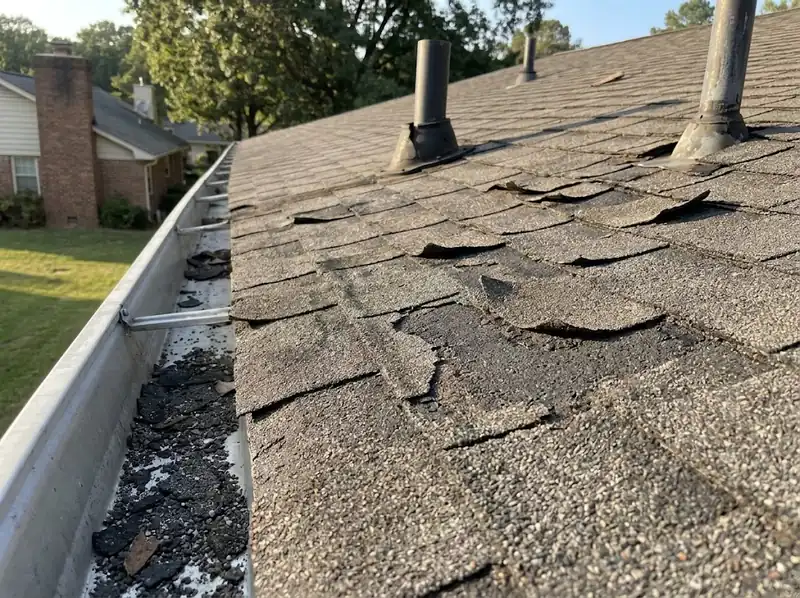
Granule loss and curling on many slopes
Granules are the sandy coating on asphalt shingles. They shield the shingle from the sun. Bare, dark patches, piles of granules in the gutters, and shingle edges that curl or cup on several sides of the house all mean the shingles have reached the end of their life.
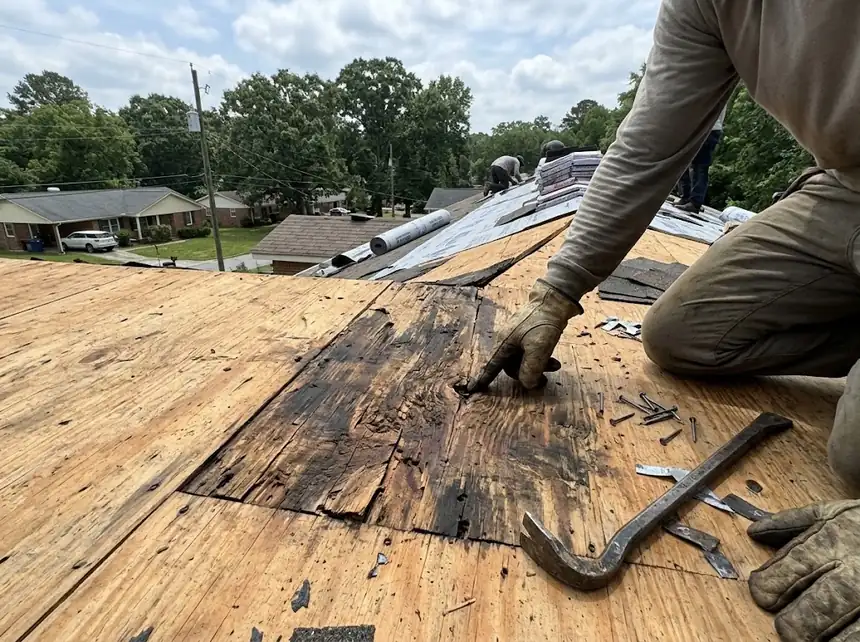
Soft, sagging or rotted decking
The decking is the plywood or board layer the shingles are nailed to. If parts of the roof feel spongy underfoot, or the roofline dips between the rafters, water has likely been getting into the wood for a while. Rotted decking has to come out, and that means removing the shingles on top of it.
Leaks that keep showing up in new places
One leak is a repair. Three leaks in three different spots over two years tell you the whole roof is breaking down. At that point, each repair buys you less time than the one before it.
Is a 20-Year-Old Roof Worth Repairing?
Sometimes. It depends on the shingle.
| Shingle type | Typical lifespan | At 20 years |
|---|---|---|
| 3-tab shingles (thin, flat, single layer) | 15 to 20 years | Near or past the end; a repair only buys time |
| Architectural shingles (thicker, layered) | 25 to 30 years | Often still worth repairing if the attic vents well |
A short-term repair on an older roof can still make sense. It stops a leak now and lets you plan the replacement for a better time, such as after hurricane season. Just go in knowing you’re buying time, not adding years.
Can You Replace Just Part of a Roof?
Yes, on the right roof. A partial replacement works when the damage stays on one slope, like the side that took a fallen limb, and the rest of the roof is in good shape.
The catch is matching. Shingles fade and lose granules as they age, so new shingles next to 15-year-old ones often look different for years. On an older roof, a partial job can also leave you replacing the other slopes a few years later.
How Eastern NC Weather Changes the Answer
Roofs here face a mix of conditions that many parts of the country never see. That’s why roof age alone doesn’t tell the full story.
Humidity works from the attic side. Warm, damp air from inside the house rises into the attic. If the attic doesn’t vent well, that moisture settles on the underside of the decking and on the nails. Over time you get darkened wood, rusty nail tips and soft spots that no one can see from the street.
Salt air wears on metal parts. Homes near the Pamlico River and along the sounds breathe salty air. It eats at metal flashing, nails and vents faster than it does inland.
Nor’easters and hurricanes loosen shingles. The Atlantic hurricane season runs from June 1 through November 30, according to the National Hurricane Center, and nor’easters bring hard wind through the colder months. A strong gust can break the seal between shingle rows without tearing anything off. The roof looks fine from the ground, but those loose shingles are the first to go in the next storm. Plenty of Beaufort County homeowners still remember what Hurricane Florence did to local roofs in 2018.
Black streaks are usually just algae. The dark stains on shaded, north-facing slopes come from algae that thrives in our humid summers. They look bad, but on their own they rarely mean a roof needs replacing.
So a 15-year-old roof over a dry, well-vented attic can be in better shape than a 10-year-old roof over a damp one.
What We Check Before Recommending Repair or Replacement
Our crew brings about 15 years of hands-on roofing and construction experience to every inspection. Here’s what we look at before we tell you which way to go:
- Shingle flexibility. Healthy shingles bend. Old ones crack when we lift a tab.
- Granules on every slope, not only the side that faces the street.
- Seal strips, to see if wind has broken the bond between rows.
- The decking. We walk the roof and feel for soft or sagging areas.
- Flashing at chimneys, walls and valleys, and every pipe boot.
- The attic, where water stains, damp insulation and rusty nails reveal problems the outside hides.
If a repair will do the job, we’ll tell you. A roof that can be repaired should be repaired. When a full replacement is the better choice, we strip the roof down to the decking instead of laying new shingles over old ones. That way we find and fix any rot before the new roof goes on.
What If Storm Damage Is Involved?
When a storm causes the damage, your homeowners insurance may cover the repair or the replacement, and the insurance company often has a say in which one it pays for. Damage from normal wear and aging is usually not covered. The NC Department of Insurance homeowners guide explains how coverage and depreciation work.
We can inspect your roof, photograph the damage, write up an estimate and meet your adjuster on site. Questions about your policy and what it covers are best answered by your insurance agent. You can read more about our storm damage roof repair service.
Not Sure Which One Your Roof Needs?
A free roof inspection gives you a clear answer before you spend a dime. We’ll show you what we found, with photos, and tell you plainly whether a repair or a replacement makes more sense for your home.
Call Prado’s Roofing at (252) 999-4827 to schedule yours. You can also learn more about our roof repair in Washington NC and roof replacement in Washington NC services.